DEMZ manufactures lifting beams under the DEMZ® trademark in accordance with TU U 28.2-20215091-001. A lifting beam is a load-handling device suspended from a crane hook or trolley ropes, used for handling various types of loads. Lifting beams are manufactured in various designs depending on their intended purpose and application. Lifting beams are operated at ambient air temperatures from -40°C to +40°C (GOST 15150-69) in environments free of chemically active gases, vapors, and dust that corrode metals.
DEMZ® lifting beams comply with the primary regulatory documents governing the manufacture of lifting mechanisms and equipment: “KVED 009: 2010-8505905000”; “NPAOP 0.00-1.80-18 (formerly NPAOP 0.00-1.01-07) Rules for the Design and Safe Operation of Hoisting Cranes, Lifting Devices, and Equipment”; “NPAOP 0.00-1.32-01 Rules for Electrical Installations”; “KND 31.4.002-96 Rules for Technical Operation of Material Handling Equipment in Seaports”; “RD 31.82.03-87 Occupational Safety Rules in Seaports”; “DSUPP Permit No. 0195.16.12”; “Electrical Apparatus for Voltages up to 1000 V. Enclosures. Degrees of Protection. GOST 14255-69”.
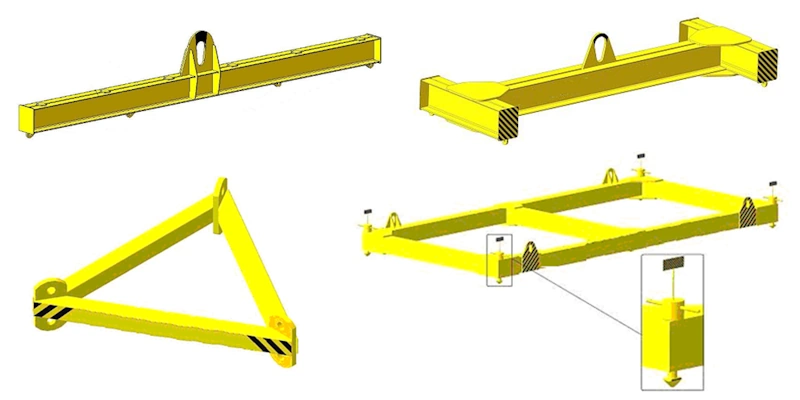
Fig. Main types of lifting beams – linear and spatial
DEMZ® spreader beams are used for handling shipping containers and serve as an indispensable, convenient solution for moving various 10–40 ft container configurations.
Request a Product Consultation
DEMZ® Linear Lifting Beams
DEMZ® linear lifting beams are categorized by lift type:
Center-lift: used for handling a wide range of cargo types and offers minimal headroom requirements; however, proper load balancing must be ensured to prevent tipping during lifting;
End-lift (two-point): requires the use of a two-leg sling and is primarily used when the load’s center of gravity is unknown or asymmetrical, as it prevents load tilting during lifting. Custom manufacturing according to customer technical specifications is available for universal, telescopic, and magnetic linear lifting beams.
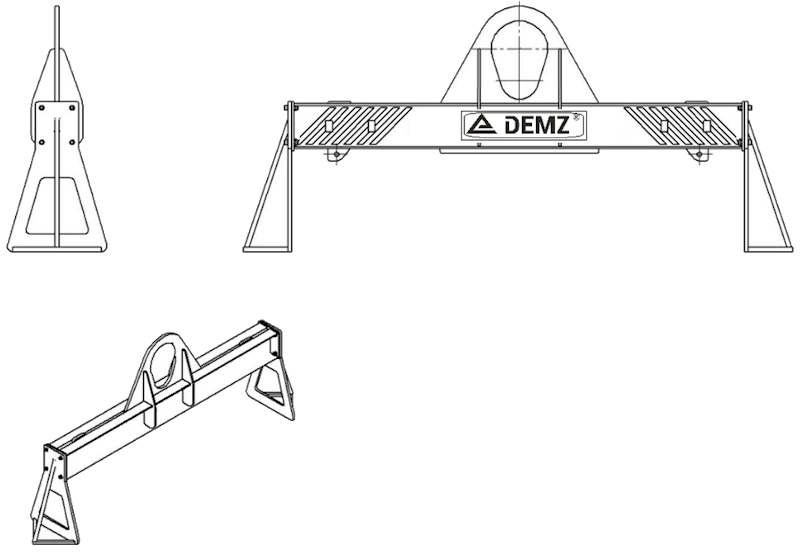
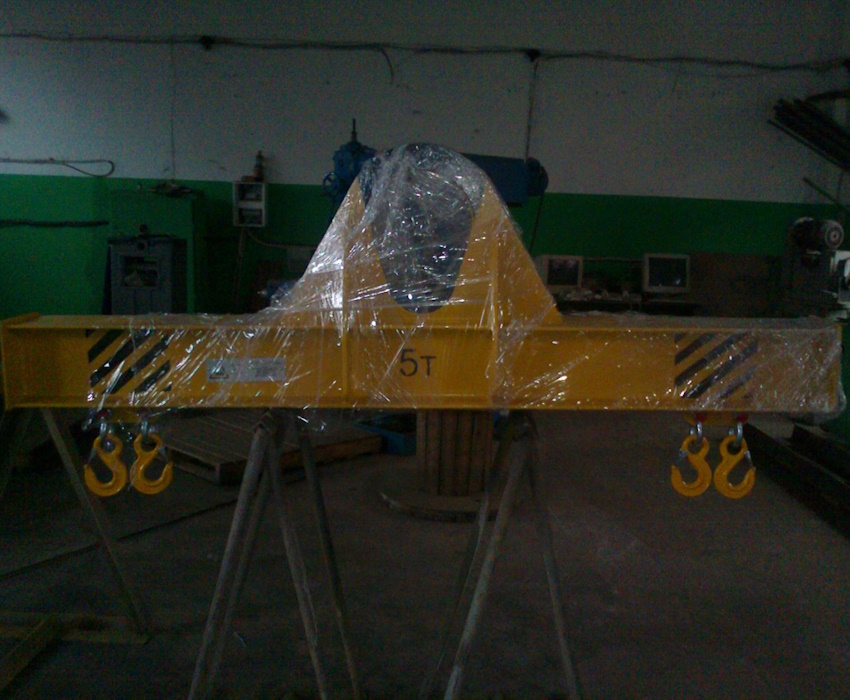
Linear lifting beams (beam type) Q=1.0–25.0 t, L=1000–10000 mm. Designed for moving long, narrow loads — typically bundled rolled steel products.
Fig. Linear lifting beam
Request a Product Consultation
DEMZ® Spatial Lifting Beams
DEMZ® spatial lifting beams are categorized by lift type:
Center-lift: designed for handling bulky loads or items where the structure eliminates sling pressure on the cargo; when using this type, proper load balancing must also be ensured;
End-lift (four-point): used for handling bulky loads and cargo requiring protection from sling pressure; requires the use of a four-leg sling and prevents load tilting during lifting.
Spatial lifting beams Q=1.0–25.0 t, L=1000–10000 mm, W=1000–10000 mm. Designed for moving oversized cargo of any complexity and weight.
The main configurations include:
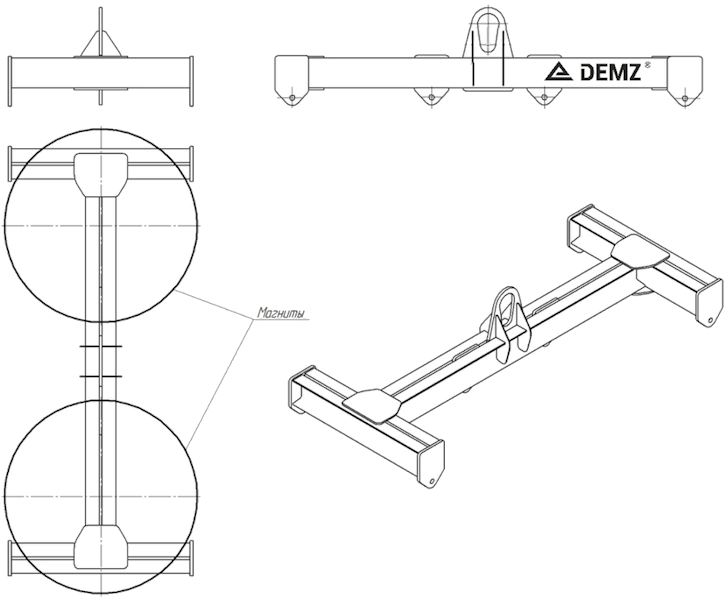
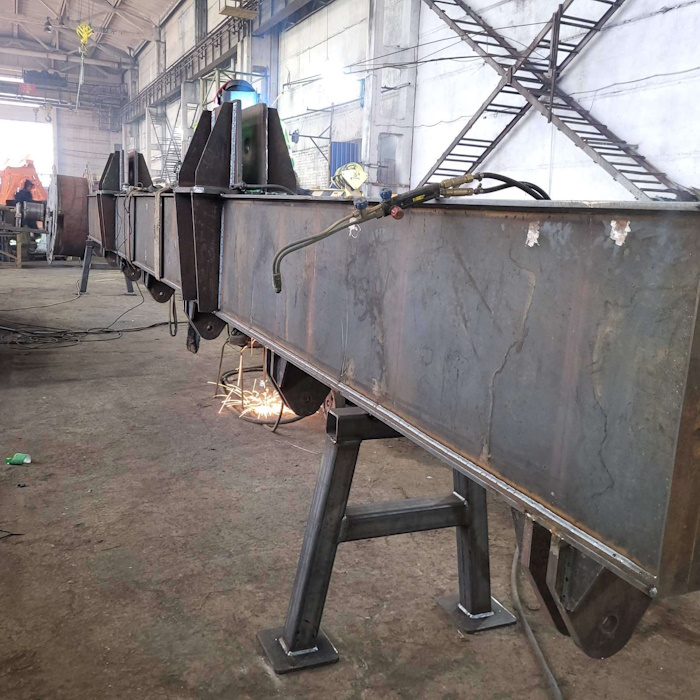
H-frame: designed for moving uniform oversized loads with fixed width and length. Indispensable in mass production — accelerates product transfer along assembly lines and between workshops.
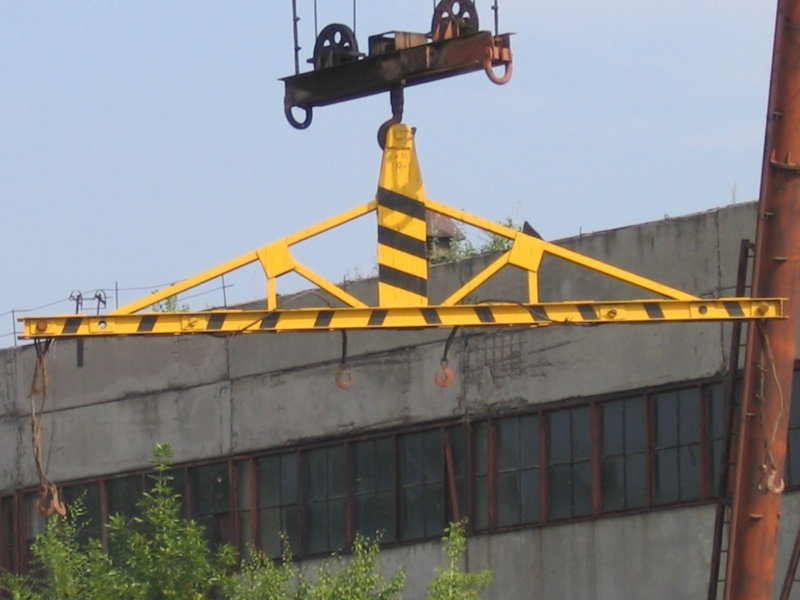
Triangular frame: essential for installation work involving cylindrical equipment such as chemical reactors, distillation columns, absorption, and adsorption towers.
Fig. H-frame spatial lifting beam
Request a Product Consultation
DEMZ® Magnetic Lifting Beams
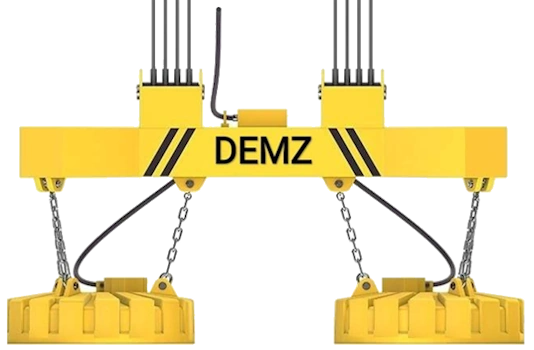
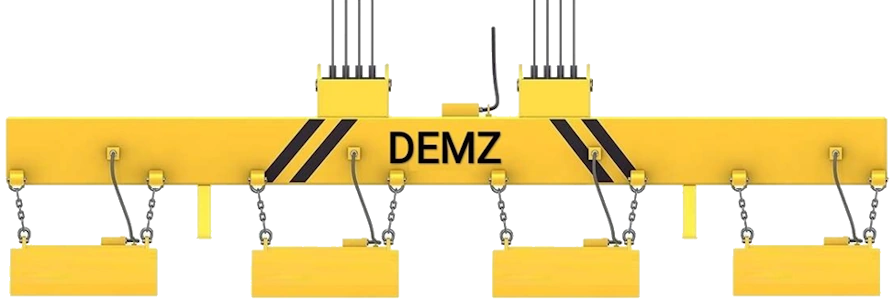
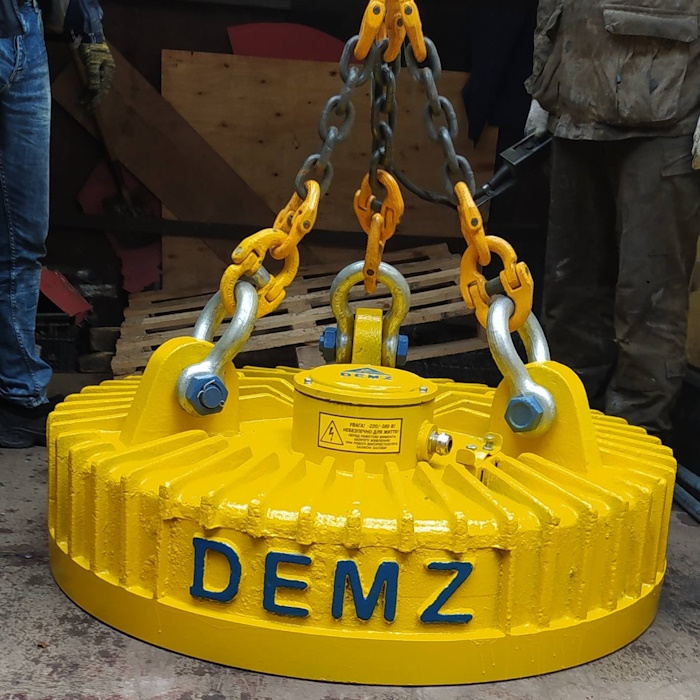
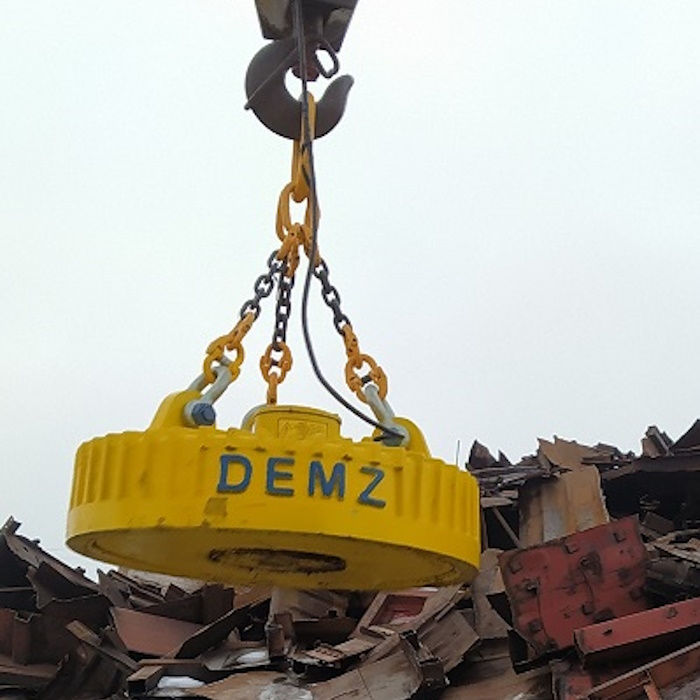
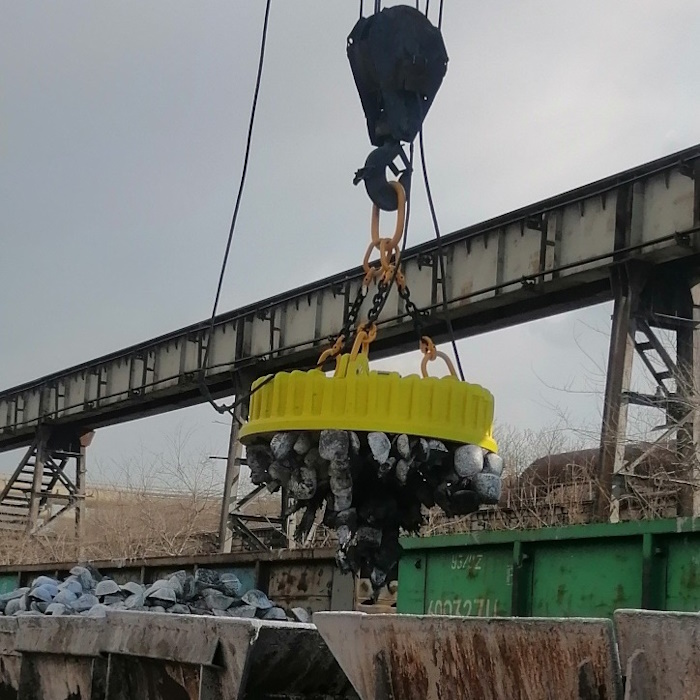
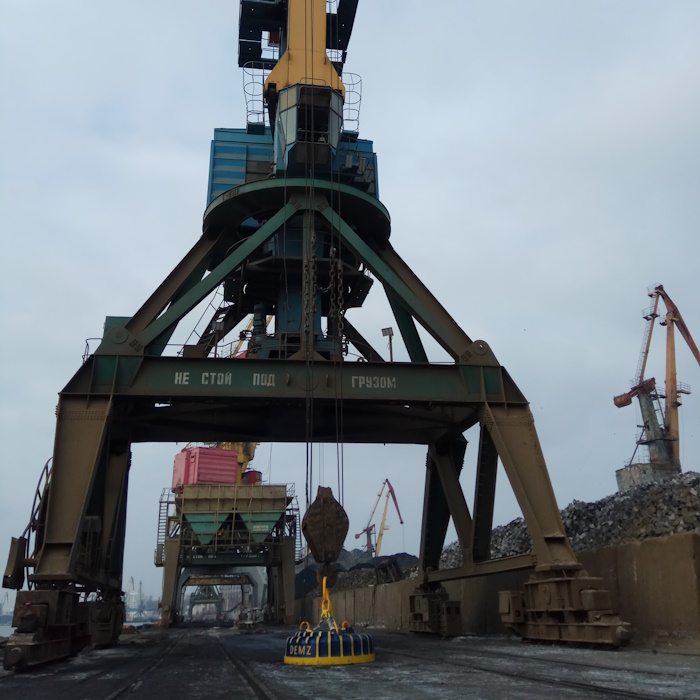
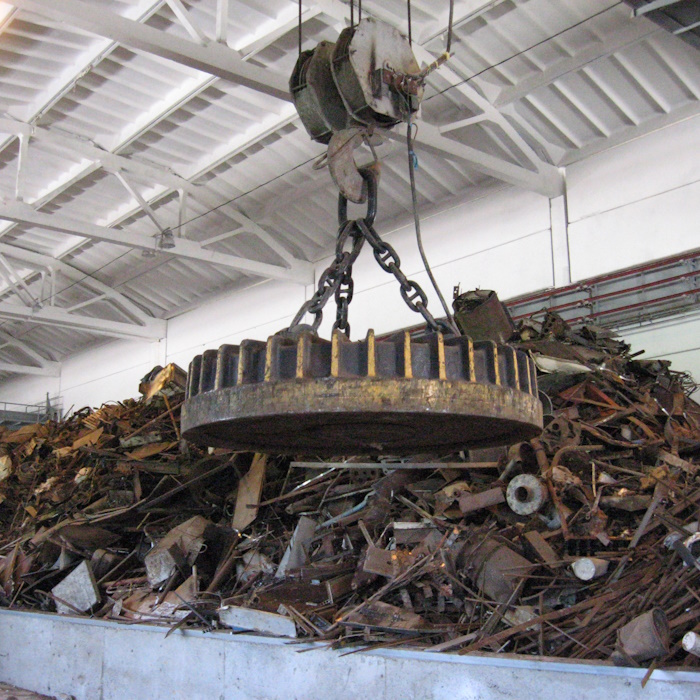
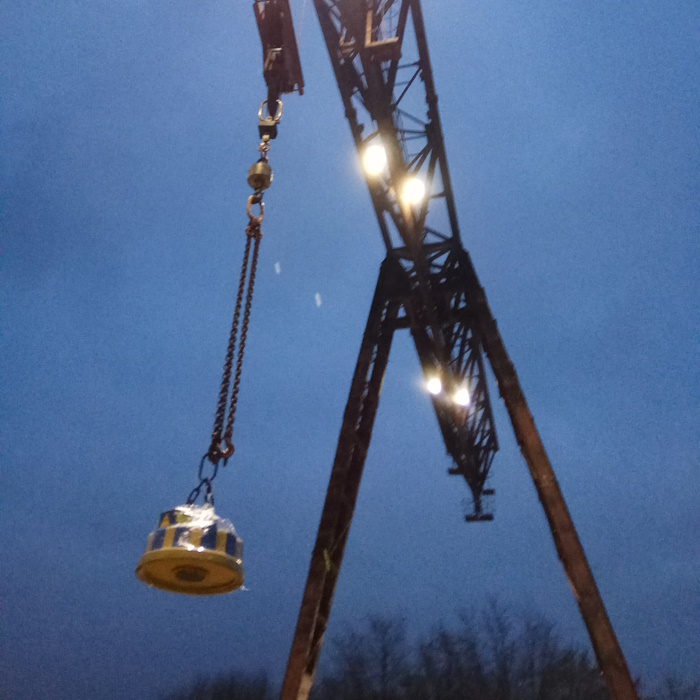
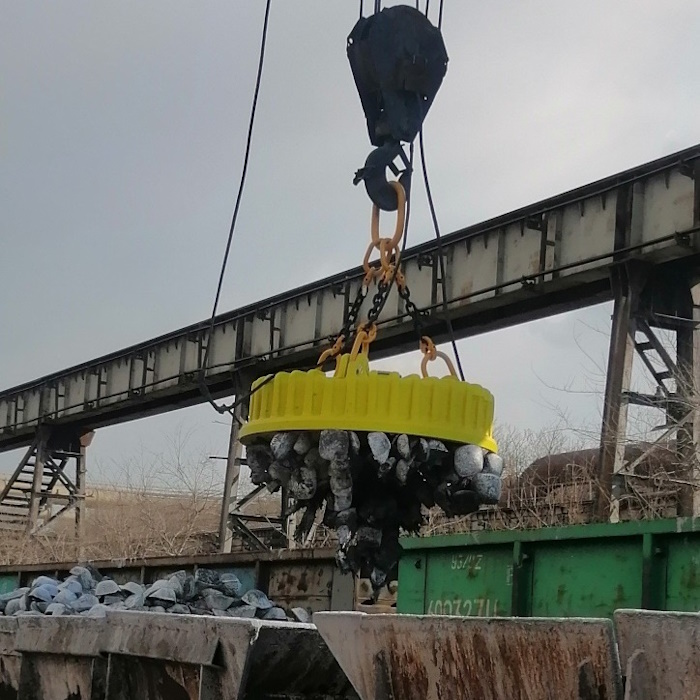
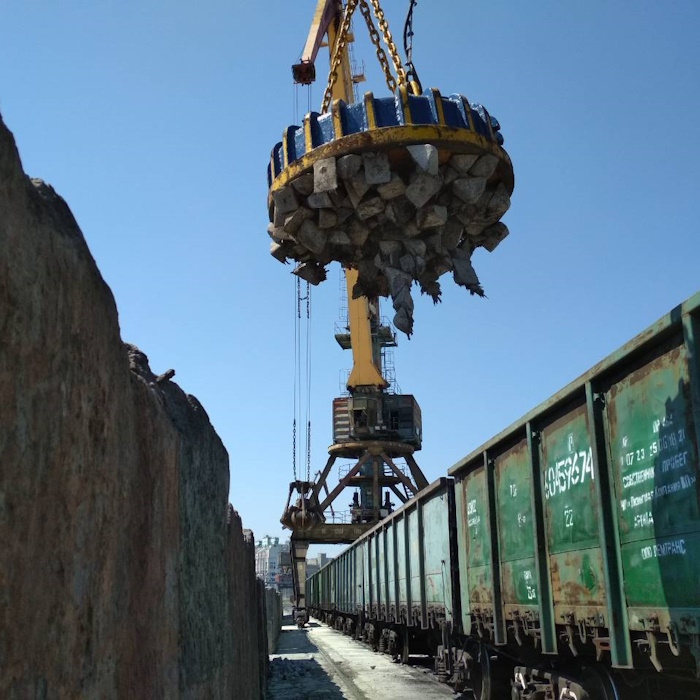
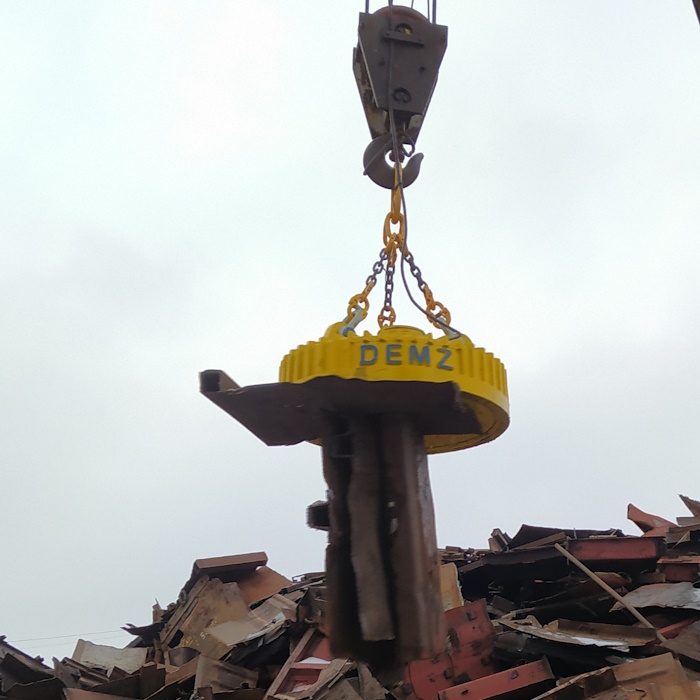
DEMZ® magnetic lifting beams are used for handling long rolled metal products, including slabs, blooms, round and square billets, sheet bundles, structural steel, and pipes of various diameters. Magnetic lifting beams equipped with various types of electromagnets are widely used on overhead and gantry cranes across the mining and metallurgical sectors.
Fig. Spatial magnetic lifting beam with round electromagnets
Fig. Linear magnetic lifting beam with rectangular electromagnets
Magnetic lifting beams offer the following advantages:
eliminates deformation of bottom sheets when unloading bundles of thin sheet metal from railcars (a common issue when using slings) and prevents permanent sheet warping caused by bending deflection;
enables loading/unloading of bulk-stacked sheets with a total bundle thickness of 50–60 mm held securely by the electromagnets;
ensures safe handling of hot rolled metal products at temperatures up to 500°C (t ≤ 500°C);
allows simultaneous handling of multiple round or square billets in a single lift;
eliminates the need for manual slinging, reducing reliance on riggers or dockworkers.
The lifting capacity of an electromagnet is the maximum load weight permitted to be lifted and moved by the magnet. It typically equals 0.5 of the breakaway (tear-off) force, providing a safety factor for secure operation.
The lifting capacity depends on the magnitude of the magnetic flux in the core. The flux increases as the magnetomotive force increases and as the magnetic reluctance of the circuit decreases.
Copper coils cost twice as much as aluminum ones; copper has 1.7 times higher conductivity than aluminum; copper density is 3.3 times higher than aluminum; copper’s specific heat capacity is 3 times lower than aluminum’s; copper coils offer more repair cycles and a longer service life than aluminum.
Welded steel housings are simple and cost-effective to produce. The advantages of a cast magnetic core over a welded one include cooling fins, greater operational durability, solid structural integrity, and the complete absence of internal air gaps.
Improper operation (faulty control cabinet, overheating, moisture exposure, overvoltage), coil-to-housing breakdown (ground fault), open-circuit/broken conductors, and inter-turn short circuits within the coil.