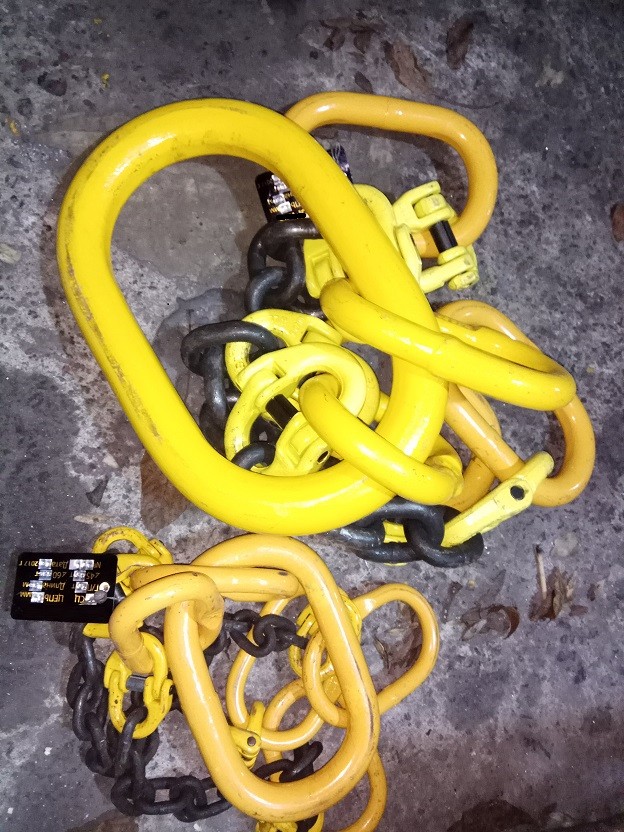
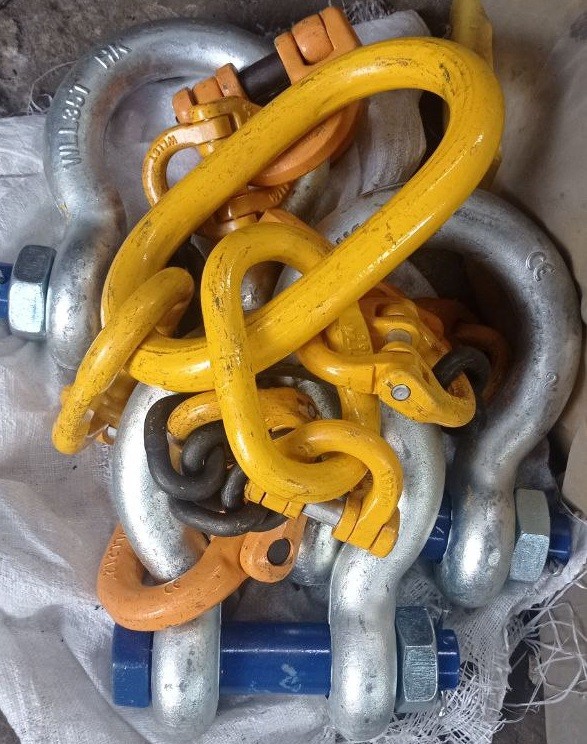
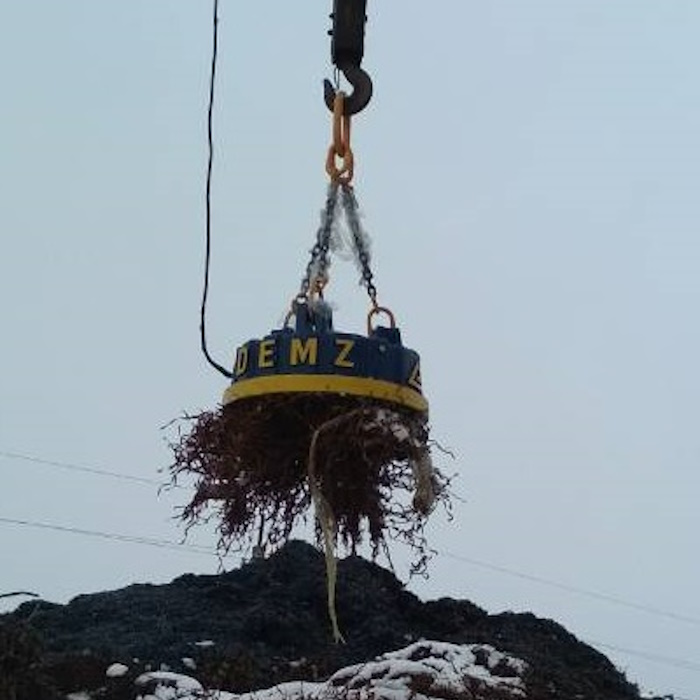
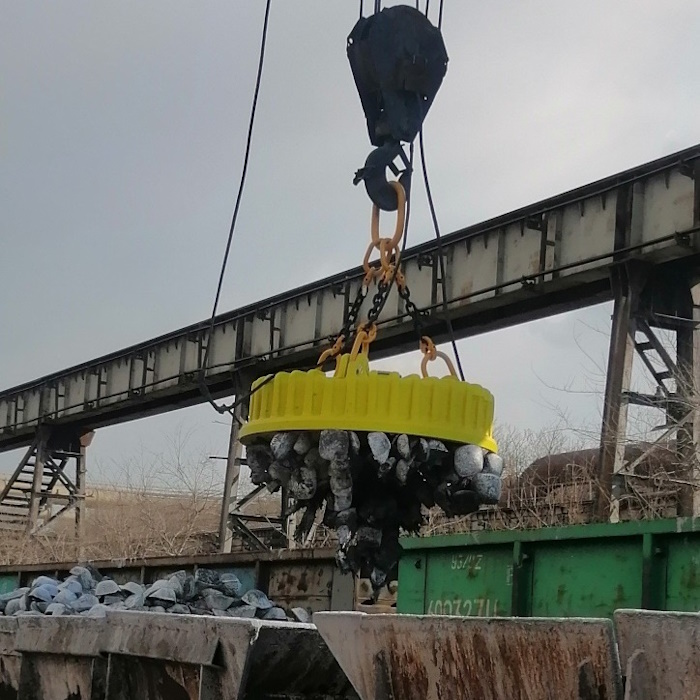
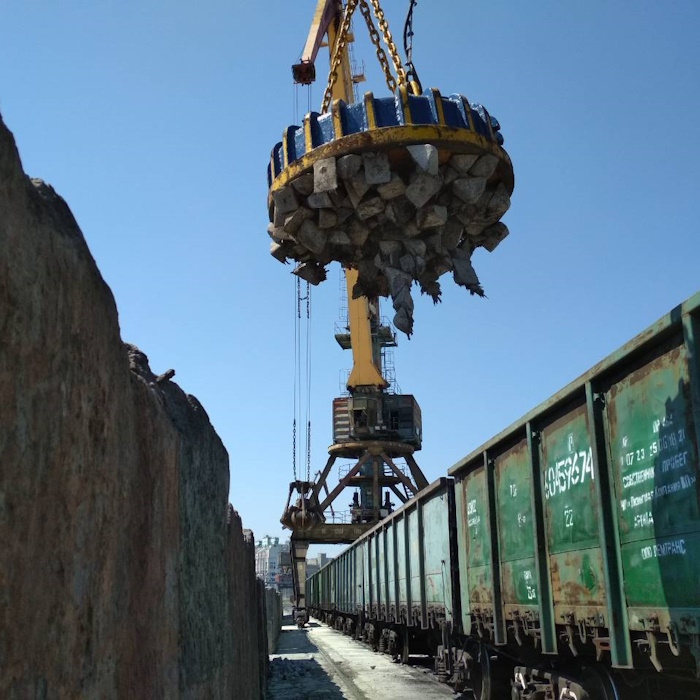
DEMZ manufactures lifting chain slings under the DEMZ® trademark in accordance with TU U 28.2-13425008-010. A chain sling is a rigging load-handling device suspended from a crane hook or various attachment fittings and hardware, used for handling various types of loads. Chain slings are manufactured in various configurations depending on their intended purpose and application. Chain slings are operated at ambient air temperatures from -40°C to +40°C (GOST 15150-69) in environments free of chemically active gases, vapors, and dust that corrode metals.
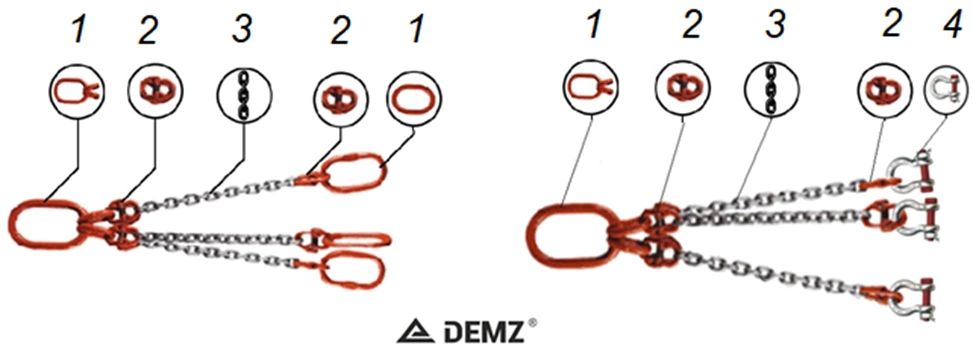
Blackened steel chains with link diameters of 6.0–26.0 mm are used, enabling the manufacture of slings with load capacities ranging from 1 to 67 tonnes, corresponding to Grade 80 (G80) strength class (Grade 100 / G100 capacity is 25% higher). The most in-demand Grade 80 (G80) chain sling configurations include: 1-leg (1SCL), 2-leg (2SCL), 3-leg (3SCL), 4-leg (4SCL), and endless (USCL).
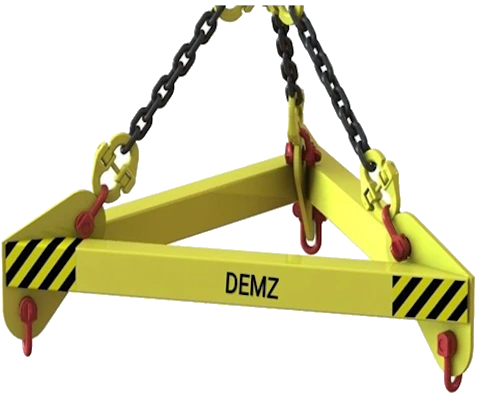
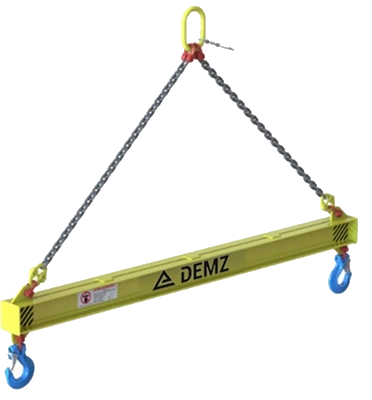
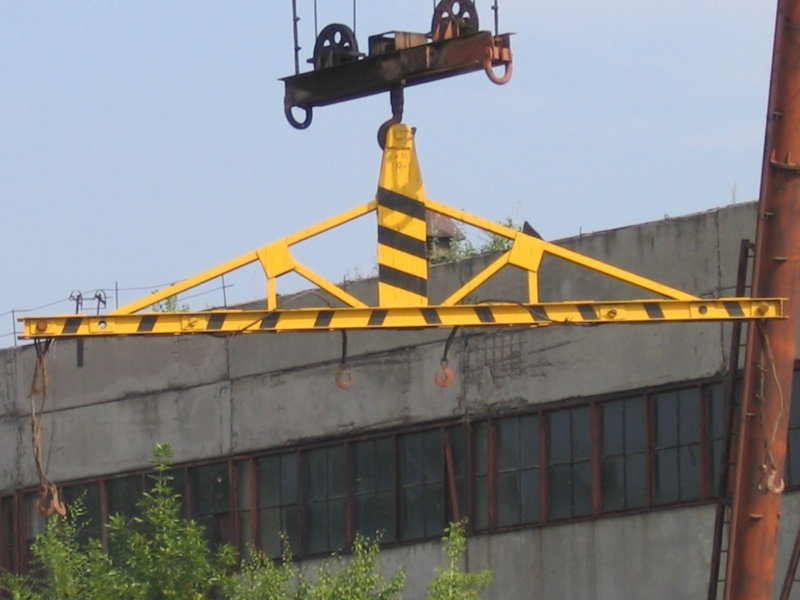
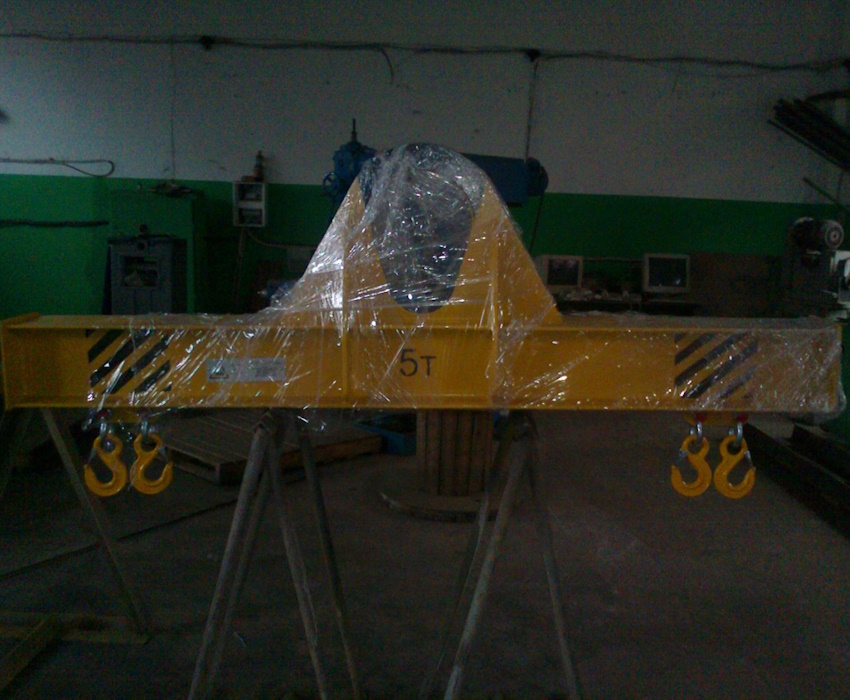
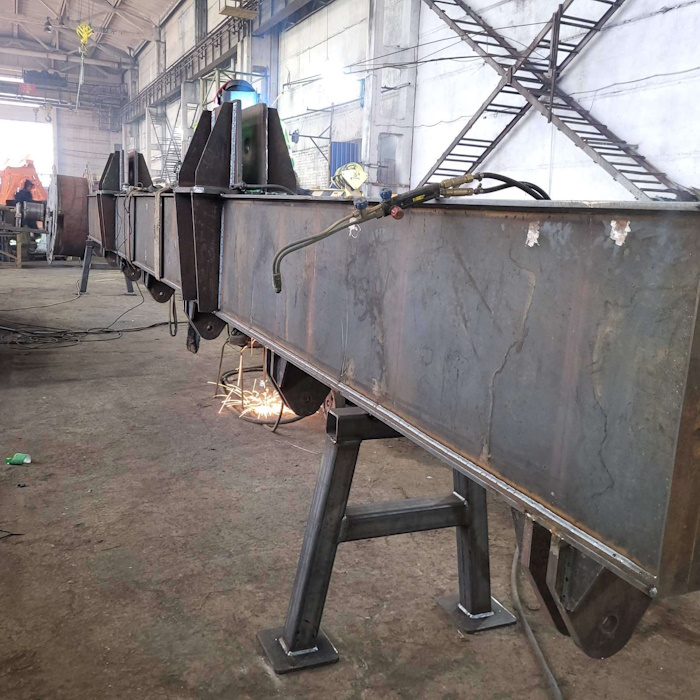
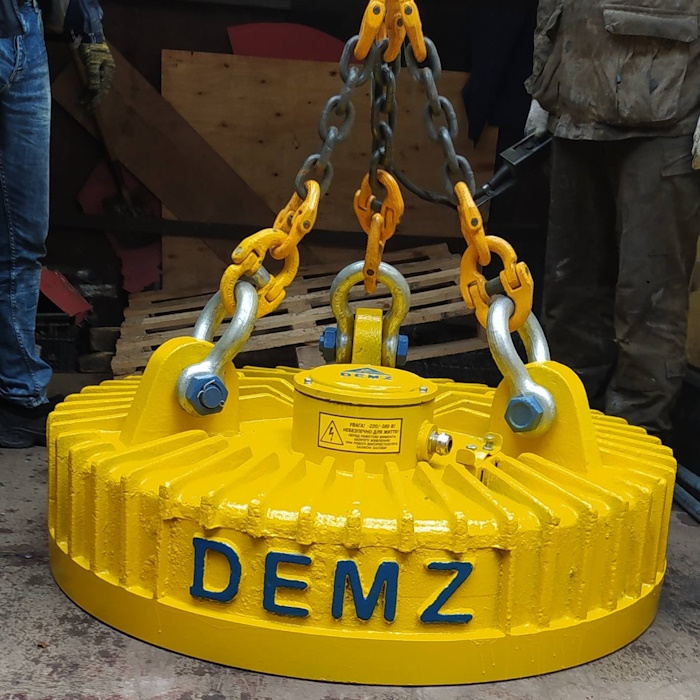
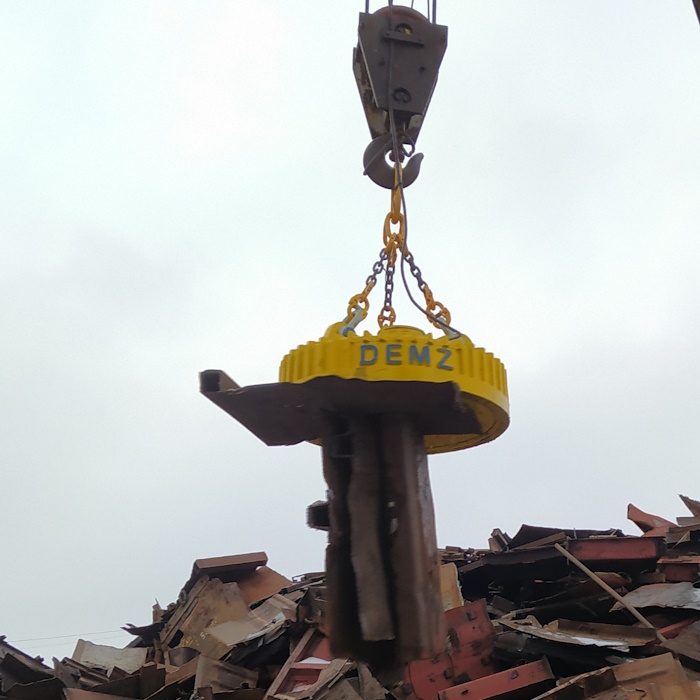
Fig. Example of chain slings used on lifting beams
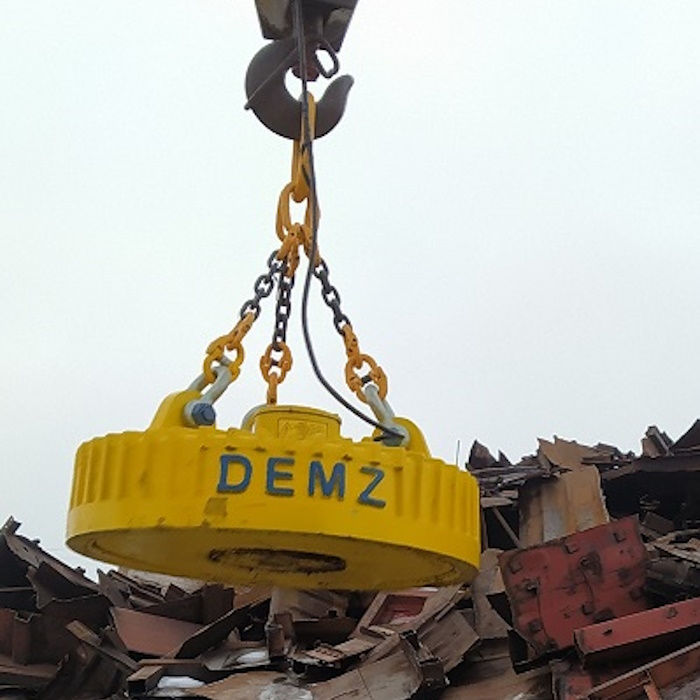
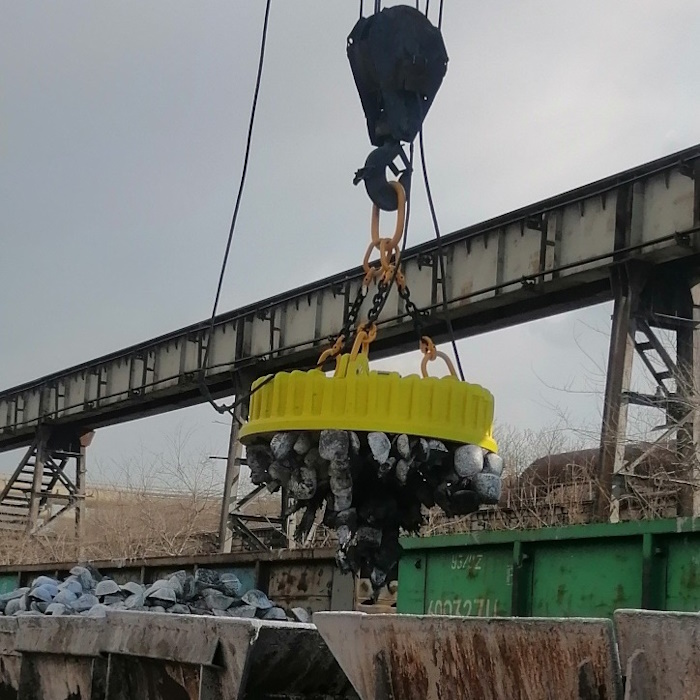
Fig. Example of chain slings used on lifting beams
Request a Product Consultation
DEMZ® chain slings comply with key regulatory standards and codes governing lifting machinery and equipment: KVED 009: 2010-8505905000; NPAOP 0.00-1.80-18 (formerly NPAOP 0.00-1.01-07) “Rules for the Structure and Safe Operation of Cranes, Hoisting Devices, and Equipment”; KND 31.4.002-96 “Rules for Technical Operation of Handling Equipment in Seaports”; RD 31.82.03-87 “Occupational Safety Rules in Seaports”; DSUPP Permit No. 0195.16.12; DIN 5687, EN 13889, EN 818-1-2001, EN 818-2-2001, EN 818-4-2017, EN 1677-2, and EN 1677-4.
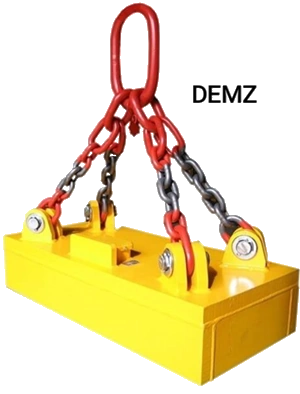
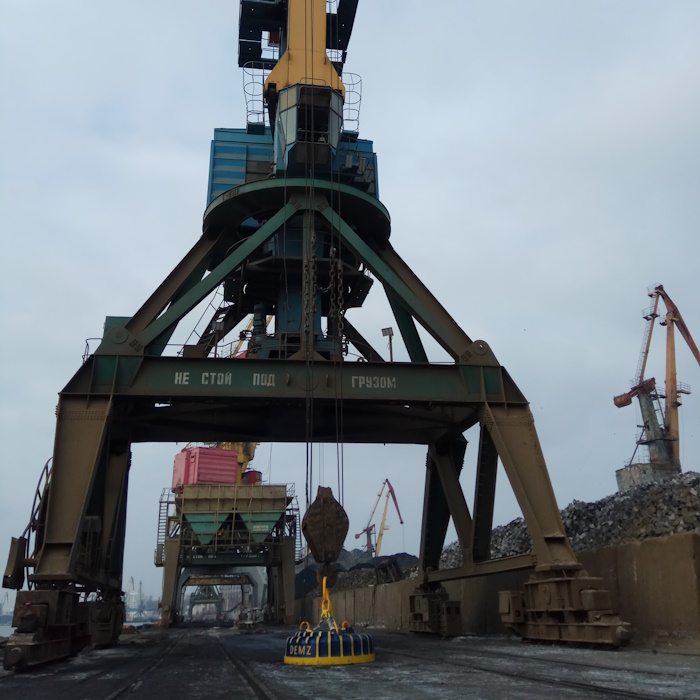
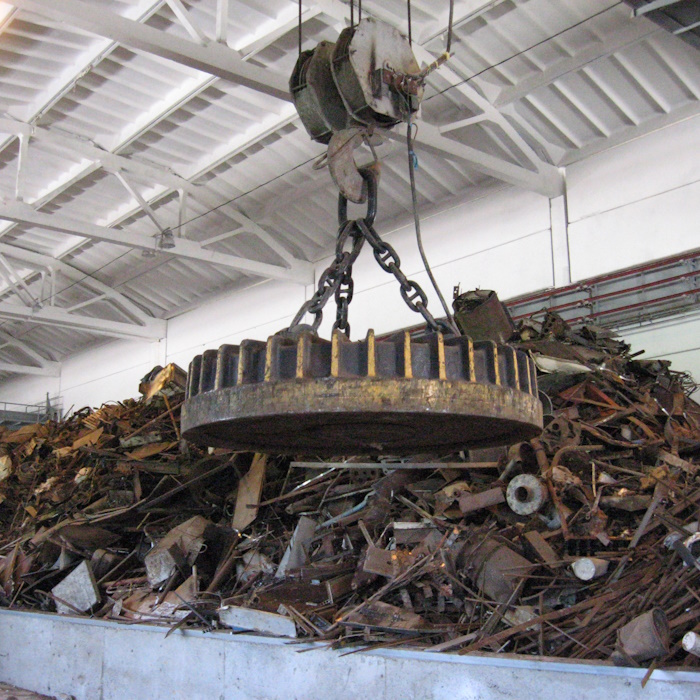
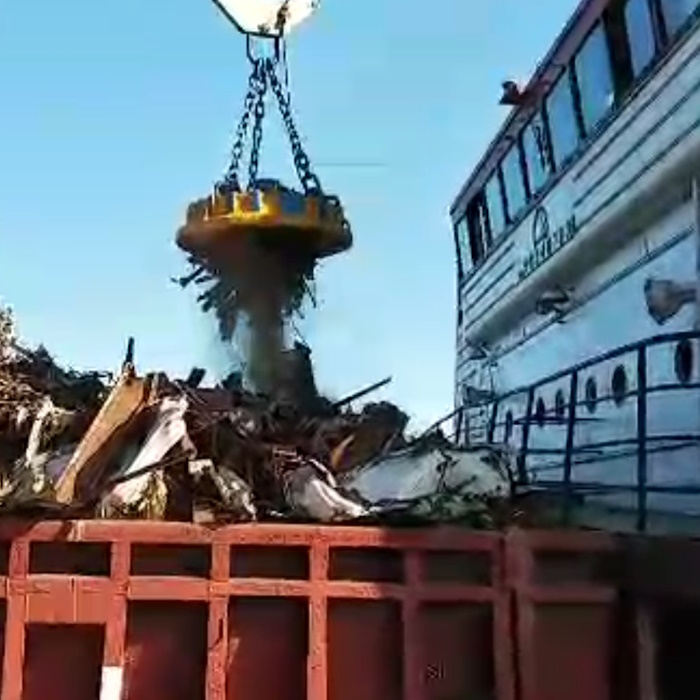
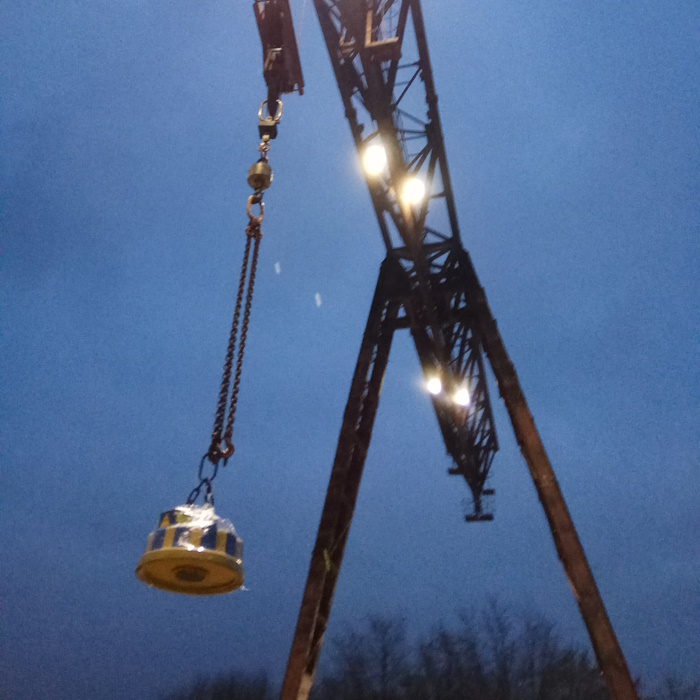
Fig. 4-leg chain sling (4SCL) on a PEM-type electromagnet
Advantages of DEMZ® chain slings:
operational at high temperatures up to 300°C, and over 500°C with derated working load limits (WLL);
high flexibility without elastic or spring-back deformation (compared to wire rope slings);
resistant to sharp load edges;
compact and easy to fold/store;
simple visual inspection and rejection criteria;
suitability for operation in aggressive environments;
repairable — individual worn components can be easily replaced;
durable — minimum service life of 5 years.
Request a Product Consultation
Operating Instructions:
inspect the condition of the chain sling prior to each use;
ensure that the protective sleeve is not twisted;
ensure the load is correctly seated in the hook (never on the hook tip);
repairs must be performed exclusively by authorized, specialized workshops;
do not exceed the rated working load limit (WLL) of the sling;
never shorten chains by tying them in knots;
chain slings may only be operated at maximum rated loads within the allowable temperature ranges.
Chain slings must not be used if:
the nominal chain diameter has decreased by more than 20% due to wear;
the length of the legs has changed due to elongation;
the identification tag is missing or illegible;
components are deformed (e.g., hook throat opening has increased by more than 10%, or the safety latch fails to operate).
Fig. Schematic layout of a 3-leg chain sling (3SCL) with Grade 8 components for a KEM-type electric lifting magnet
The lifting capacity of an electromagnet is the maximum load weight permitted to be lifted and moved by the magnet. It typically equals 0.5 of the breakaway (tear-off) force, providing a safety factor for secure operation.
The lifting capacity depends on the magnitude of the magnetic flux in the core. The flux increases as the magnetomotive force increases and as the magnetic reluctance of the circuit decreases.
Copper coils cost twice as much as aluminum ones; copper has 1.7 times higher conductivity than aluminum; copper density is 3.3 times higher than aluminum; copper’s specific heat capacity is 3 times lower than aluminum’s; copper coils offer more repair cycles and a longer service life than aluminum.
Welded steel housings are simple and cost-effective to produce. The advantages of a cast magnetic core over a welded one include cooling fins, greater operational durability, solid structural integrity, and the complete absence of internal air gaps.
Improper operation (faulty control cabinet, overheating, moisture exposure, overvoltage), coil-to-housing breakdown (ground fault), open-circuit/broken conductors, and inter-turn short circuits within the coil.