
Self-Unloading Separators
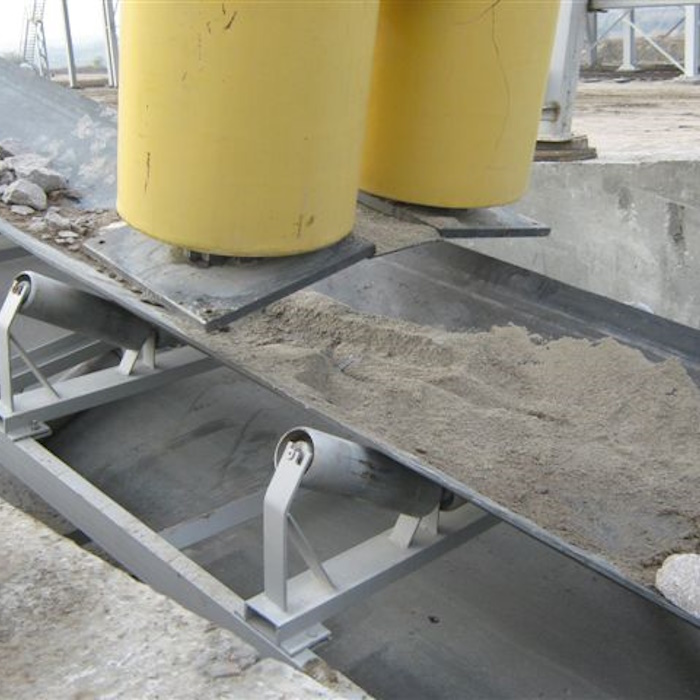
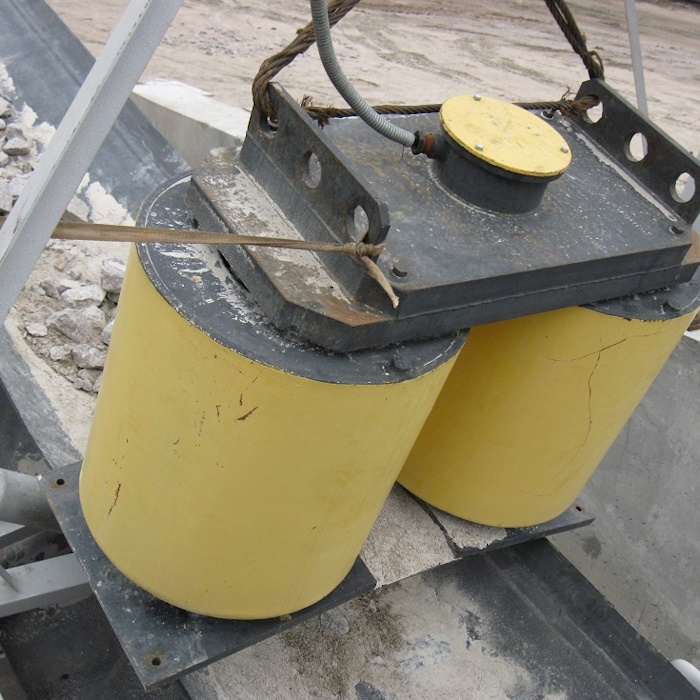
DEMZ® PS Series Suspended Self-Unloading Separators
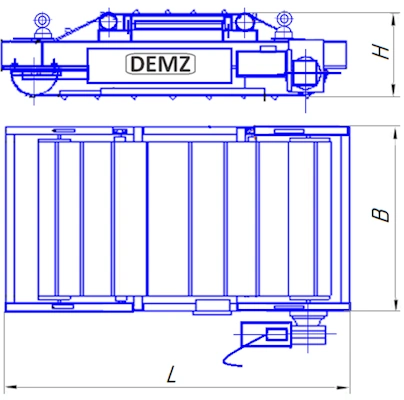
Table. Main Specifications of PSE Series Separators
| PSE Type | Conveyor belt width, mm | Power, kW | Material layer thickness on belt, mm | Dimensions, mm | Weight, kg | |||
| magnet | electric motor | L | B | H | ||||
| 10 | 1000 | 2.5 | 3.0 | 250 | 2500 | 1700 | 900 | 1800 |
| 12 | 1200 | 4.0 | 3.0 | 400 | 2900 | 1900 | 950 | 4000 |
| 16 | 1600 | 5.0 | 5.5 | 500 | 3300 | 2500 | 1000 | 6000 |
| 20 | 2000 | 6.0 | 5.5 | 600 | 4200 | 2200 | 1200 | 7000 |

Consultation
Our standards

Contact Us
Frequently Asked Questions (FAQ)
The lifting capacity of an electromagnet is the maximum load weight permitted to be lifted and moved by the magnet. It typically equals 0.5 of the breakaway (tear-off) force, providing a safety factor for secure operation.
The lifting capacity depends on the magnitude of the magnetic flux in the core. The flux increases as the magnetomotive force increases and as the magnetic reluctance of the circuit decreases.
Copper coils cost twice as much as aluminum ones; copper has 1.7 times higher conductivity than aluminum; copper density is 3.3 times higher than aluminum; copper’s specific heat capacity is 3 times lower than aluminum’s; copper coils offer more repair cycles and a longer service life than aluminum.
Welded steel housings are simple and cost-effective to produce. The advantages of a cast magnetic core over a welded one include cooling fins, greater operational durability, solid structural integrity, and the complete absence of internal air gaps.
Overheating, lower density of scrap metal, switching to metal stock with larger air gaps, and malfunctions in the control cabinet (voltage converter).
Improper operation (faulty control cabinet, overheating, moisture exposure, overvoltage), coil-to-housing breakdown (ground fault), open-circuit/broken conductors, and inter-turn short circuits within the coil.