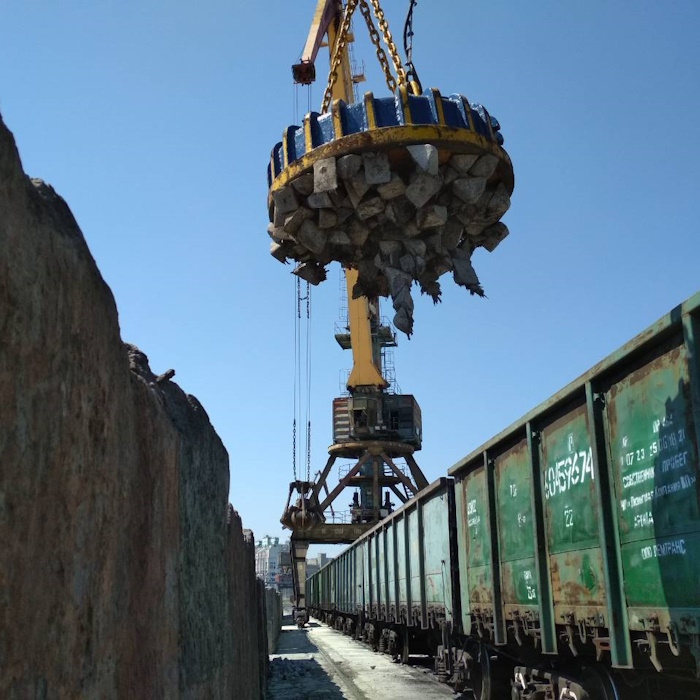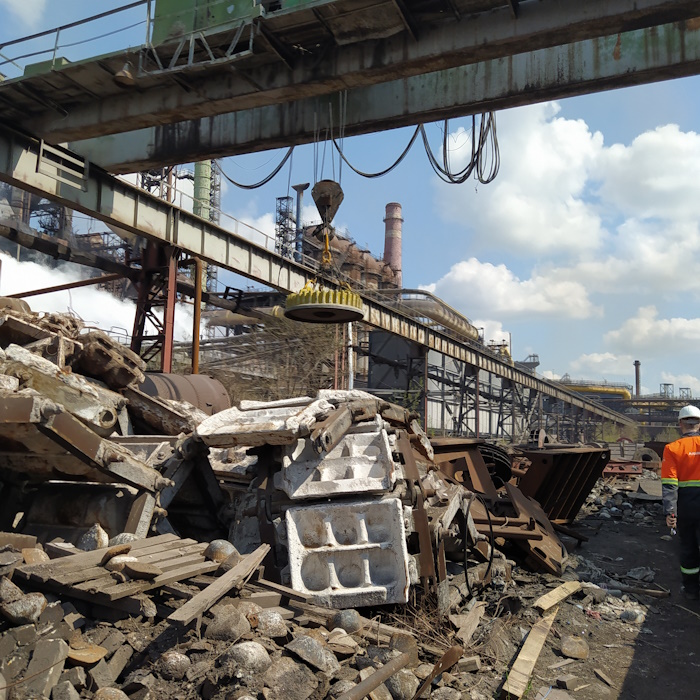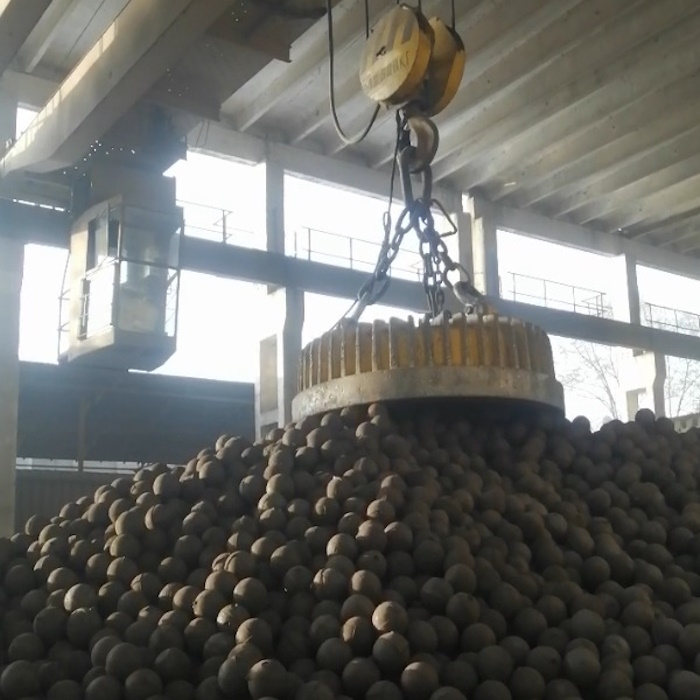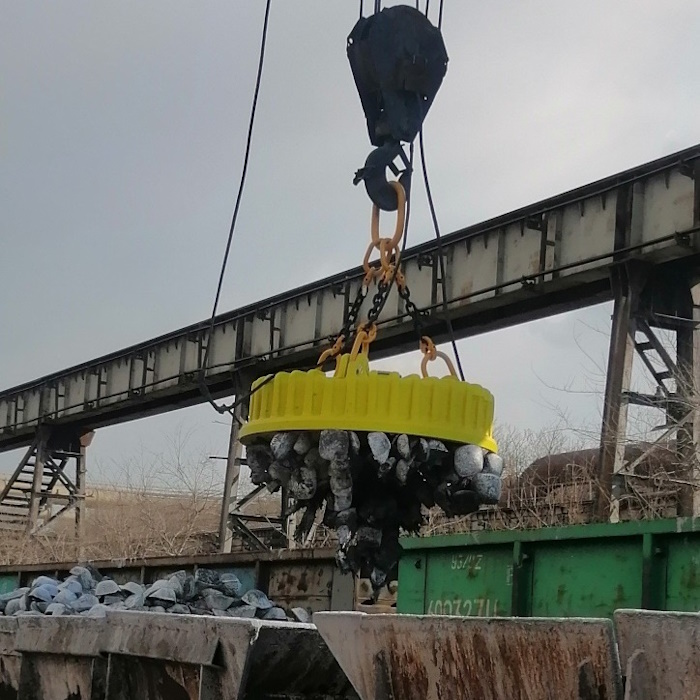
Rectangular Series Lifting Magnets
Rectangular Series Magnets DEMZ

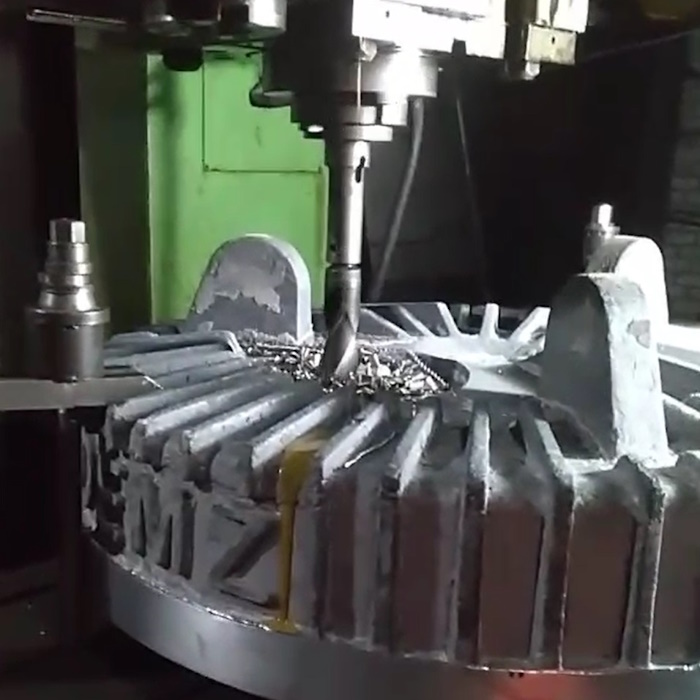
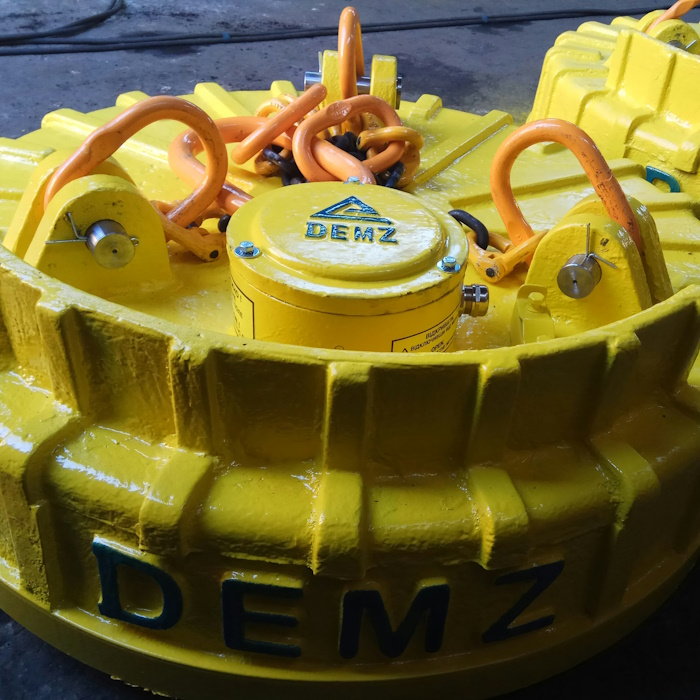
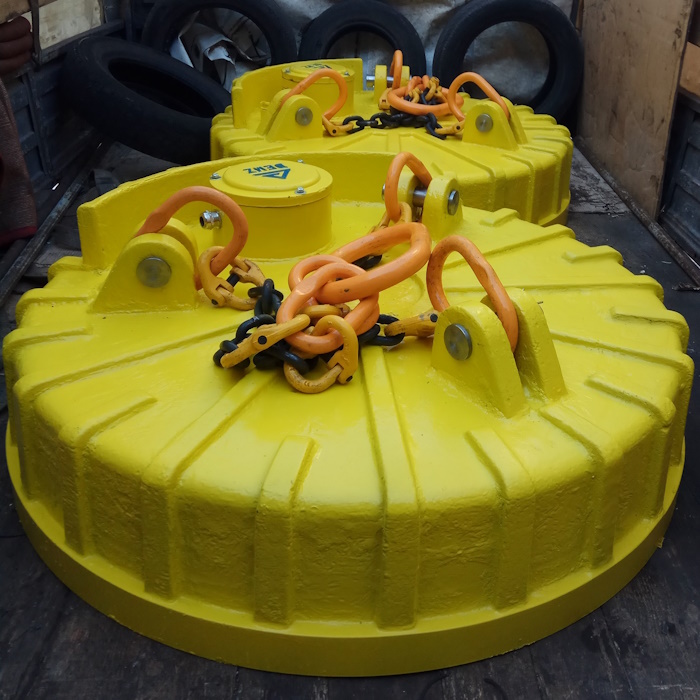
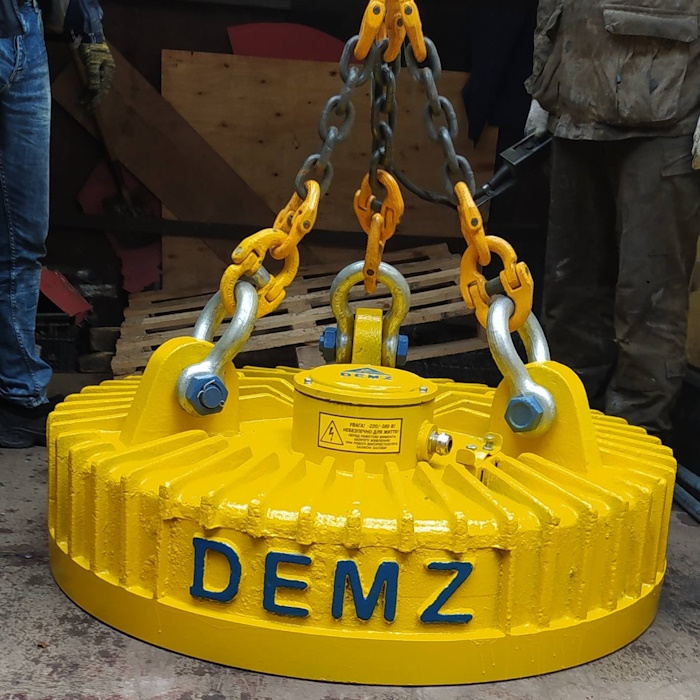
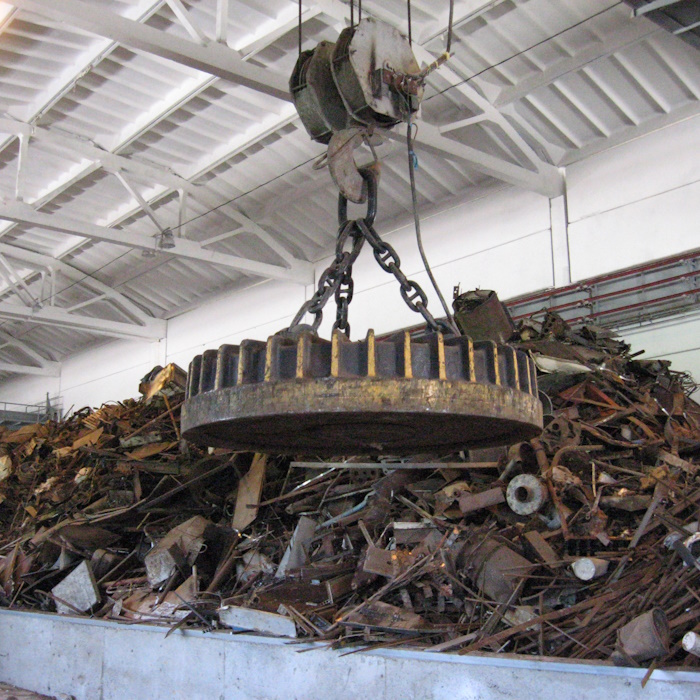
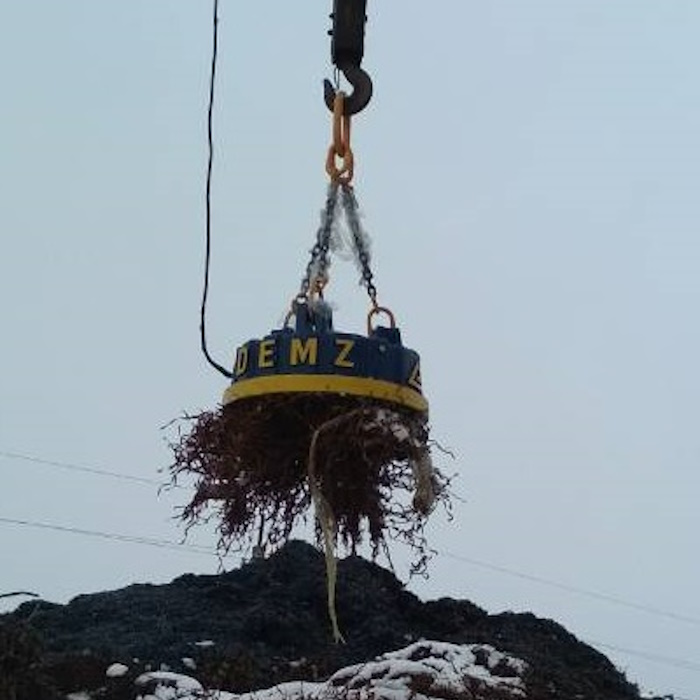
DEMZ® PEM magnet series are a modern modification of DC electric lifting magnets featuring a rectangular magnetic core, designed for handling various types of rolled steel, long forgings, slabs, and blooms. Typically, magnets of this series are operated in rolling mills at metallurgical plants. According to Customer requirements and technical specifications, we offer alternative configurations — a version with a finned cast steel housing and a version with a smooth welded steel housing.
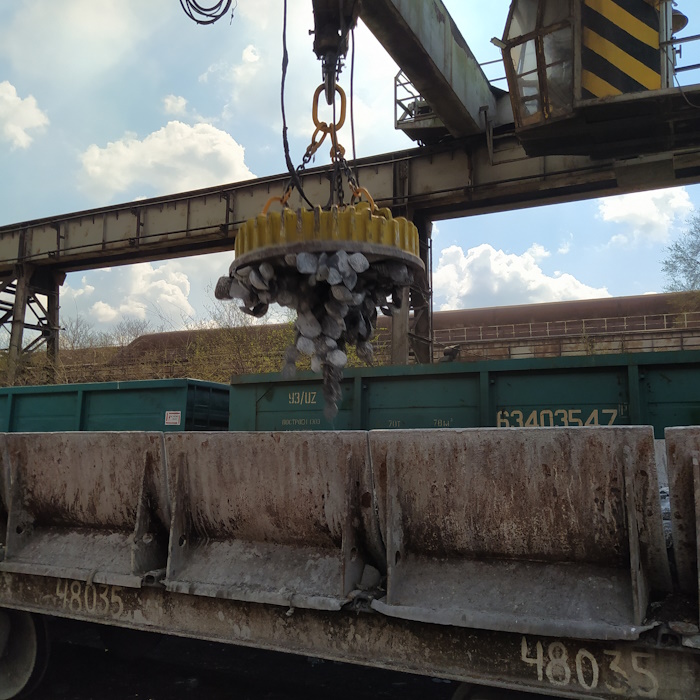
Customer Options: To prevent premature wear of the outer and inner pole working surfaces, we perform hardfacing with carbide electrodes; for unloading railcars and trucks, buffer devices can be installed on the outer pole; and for operating the magnet under severe conditions, we fit the power supply line with special connectors, metal or heat-resistant sleeves, and armored or heat-resistant cables.

Consultation
Lifting Magnets Rectangular Series
Technical Features:
- Compliance with European and Ukrainian standards
- High reliability and durability
- High performance
- High duty cycle and operational stability
- Custom design capability
- Advanced materials
- Reinforced cast magnetic core design with enlarged poles
- Efficient heat dissipation technology
- Special executions — heat-resistant and waterproof
- Ease of operation and maintenance
- Accompanying technical documentation — product passport, operating manual, service logbook, and technical regulations
- 2-year warranty
- 10-year service life
- Technical support during and post-warranty periods
- Tailored approach fulfilling Customer specifications
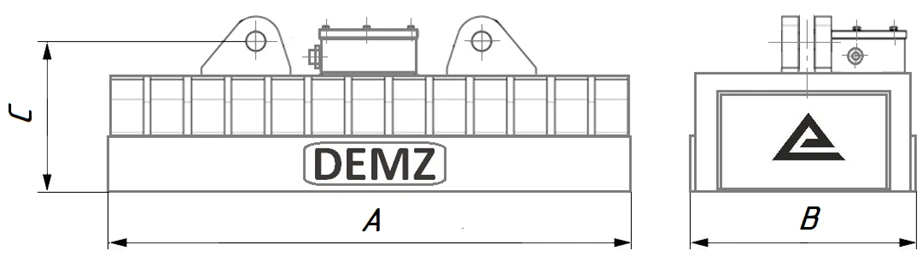
Table. Physical and Dimensional Specifications of PEM-Type Magnets
| PEM Type | Rated Current, A | Rated Power, W* | Dimensions, mm | Weight, kg | ||
| A | B | C | ||||
| 11 | 18 | 3960 | 1100 | 640 | 450 | 1400 |
| 12 | 25 | 5500 | 1200 | 600 | 400 | 1500 |
| 12bis | 30 | 6600 | 1200 | 900 | 400 | 2000 |
| 14 | 30 | 6600 | 1400 | 350 | 450 | 1600 |
| 14bis | 35 | 7700 | 1400 | 700 | 450 | 1900 |
| 17 | 30 | 6600 | 1700 | 450 | 450 | 1700 |
| 17bis | 33 | 7260 | 1700 | 700 | 450 | 2000 |
| 20 | 38 | 8360 | 2000 | 500 | 450 | 2300 |
| 20bis | 45 | 9900 | 2000 | 1000 | 450 | 2700 |
* The specified power consumption of the magnet applies to the cold state and is intended for the correct selection of electrical equipment and accessories. As the magnet coil heats up, power consumption will decrease.
Table. Lifting Capacity of PEM-Type Electromagnets, kg**
| PEM Type | Breakaway Force | Slab |
| 11*** | 19000 | 9500 |
| 12 | 20000 | 10000 |
| 12bis | 24000 | 12000 |
| 14 | 24000 | 12000 |
| 14bis | 29000 | 14500 |
| 17 | 30000 | 15000 |
| 17bis**** | 36000 | 18000 |
| 20 | 53000 | 26500 |
| 20bis | 60000 | 30000 |
** Specified lifting capacity is based on testing under optimal conditions in accordance with the DIN-VDE 0580 standard; actual performance depends on specific operating conditions (shape, alloy composition, placement, operator efficiency, etc.). The allowable relative duty cycle averages 60% ED / 10 minutes.
*** Upgraded equivalent of PM15 and MP16 type magnets.
**** Upgraded equivalent of PM25 and PM26 type magnets.
We will be glad to recommend a magnet type and assist you in selecting the unit best suited for your production needs.
We look forward to receiving your inquiries.
years in the CIS and European equipment market
units of manufactured products
units of industrial equipment repaired
types and varieties of products
Our standards
Contact Us
Frequently Asked Questions (FAQ)
The lifting capacity of an electromagnet is the maximum load weight permitted to be lifted and moved by the magnet. It typically equals 0.5 of the breakaway (tear-off) force, providing a safety factor for secure operation.
The lifting capacity depends on the magnitude of the magnetic flux in the core. The flux increases as the magnetomotive force increases and as the magnetic reluctance of the circuit decreases.
Copper coils cost twice as much as aluminum ones; copper has 1.7 times higher conductivity than aluminum; copper density is 3.3 times higher than aluminum; copper’s specific heat capacity is 3 times lower than aluminum’s; copper coils offer more repair cycles and a longer service life than aluminum.
Welded steel housings are simple and cost-effective to produce. The advantages of a cast magnetic core over a welded one include cooling fins, greater operational durability, solid structural integrity, and the complete absence of internal air gaps.
Overheating, lower density of scrap metal, switching to metal stock with larger air gaps, and malfunctions in the control cabinet (voltage converter).
Improper operation (faulty control cabinet, overheating, moisture exposure, overvoltage), coil-to-housing breakdown (ground fault), open-circuit/broken conductors, and inter-turn short circuits within the coil.